No products in the cart.
Shop all products

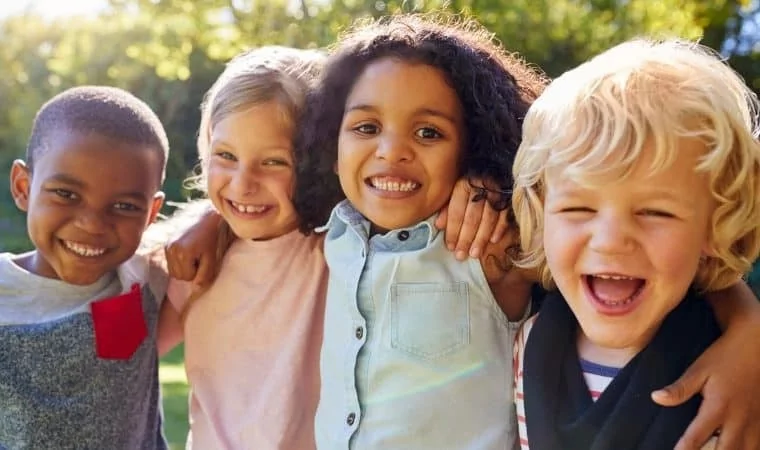
The International Democratic Federation of Women officially established World Children’s Day in 1950, after holding a congress in Paris in 1949. It is important to note that the date varies from country to country.
Like many other countries, Portugal adopted June 1st to celebrate Children’s Day, aiming to promote the rights and well-being of all children and support their full development.
Thus, to mark this day and, in addition to raising children’s awareness about issues affecting other children worldwide, it is always important to remember the Universal Declaration of the Rights of the Child, which states:
- All children have the right to life and liberty.
- We must protect all children from domestic violence.
- All children are equal and have the same rights, regardless of their color, sex, religion, social origin, or nationality.
- Families and society must protect all children.
- All children have the right to a name and nationality.
- All children have the right to food and medical care.
- Children with special physical or mental needs have the right to education and special care.
- All children have the right to love and understanding from their parents and society
- All children have the right to education.
- All children have the right not to be verbally abused or physically harmed by society.
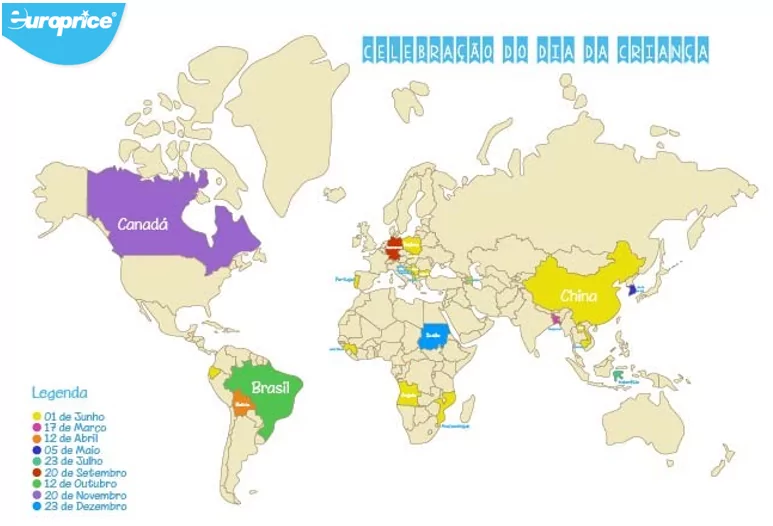
In short, you can see in the figure below the date of World Children’s Day celebrations in other countries:
Above all: “Children and adolescents have all human rights, not because they are ‘the future,’ but because they are human beings. Today.”
Want to get our articles first? Subscribe to our newsletter and don’t miss any updates.