The geoboard is a highly effective pedagogical tool used in the teaching of mathematics, especially for exploring geometric concepts. Developed by mathematician Caleb Gattegno in the 1960s, the geoboard is quite simple, yet it offers a wide range of educational possibilities. In this article, we will explore what a geoboard is, how it can be used in education, and the benefits it provides.
What is a Geoboard?
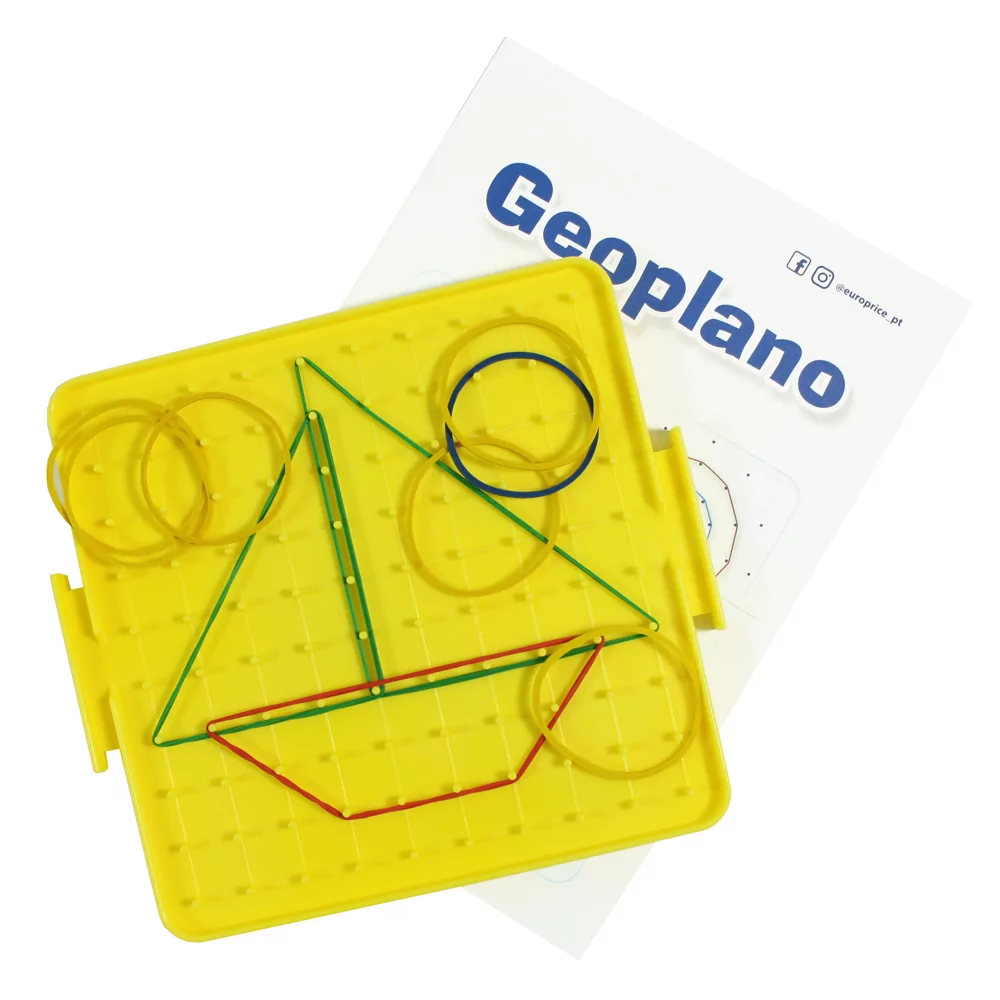
A geoboard is a flat board, usually square, with a grid of evenly spaced pegs. Rubber bands are used to form geometric shapes around these pegs. The simplicity of the geoboard makes it an accessible and versatile resource for teachers and students.
Benefits of Its Use in Education
1. Visualization and Understanding of Geometric Concepts
This educational tool makes it easier to visualize abstract geometric concepts, making them more concrete and understandable. In this way, young learners can create shapes, explore the properties of figures, and understand spatial relationships in a hands-on manner.
2. Development of Motor Skills
Primarily, manipulating the rubber bands and creating shapes on the geoboard helps develop fine motor skills. This hands-on aspect is especially beneficial for younger children, who are still developing their motor coordination.
3. Stimulates Creative Thinking
In fact, the geoboard allows students to experiment and create their own shapes and patterns. This encouragement of creative thinking and individual exploration promotes deeper and more meaningful learning.
4. Differentiated Instruction
Similarly, geoboards can be used to differentiate instruction, adapting activities for different levels of ability and development. From basic shape exploration to the investigation of more complex geometric theorems, the geoboard can be used in a highly flexible way.
How to Use the Geoboard
1. Introduction to Geometric Shapes
First, it can be used to introduce basic shapes such as triangles, squares, and rectangles. Young learners can create these shapes and discuss their properties, such as the number of sides and angles.
2. Exploring Perimeter and Area
It is also an excellent tool for exploring concepts of perimeter and area. For example, children can create different shapes and calculate their perimeter and area, comparing the results and observing how shapes and sizes affect these calculations.
3. Symmetry and Transformations
Similarly, it can be used to teach concepts of symmetry, translation, rotation, and reflection. Children can create a shape and then manipulate it to see how these transformations affect its position and orientation.
4. Exploration of Geometric Properties
However, at a more advanced stage, it can be used to investigate more complex geometric properties, such as the Pythagorean and Thales’ theorems, as it helps facilitate the visualization and understanding of these concepts.
Hands-On Activities with the Geoboard
1. Free Drawing
Allowing students to draw freely on the geoboard can be a fun introductory activity. This helps them become familiar with the tool and develop their motor skills.
2. Geometric Challenges
Similarly, posing challenges such as “Create an equilateral triangle” or “Form a rectangle with twice the area of a square” encourages students to apply their geometry knowledge in a practical and engaging way.
3. Pattern Exploration
Students can also create and explore geometric patterns on the geoboard. This, in turn, helps develop pattern recognition and the understanding of related mathematical concepts.
Conclusion
In summary, the geoboard is a powerful educational tool that offers a hands-on and visual approach to teaching geometry. Its simplicity and versatility make this educational tool a valuable resource for teachers and parents who want to make learning mathematics more accessible and engaging. Ultimately, incorporating the geoboard into daily teaching activities (or even play) can provide young learners with a deeper and longer-lasting understanding of geometric concepts.
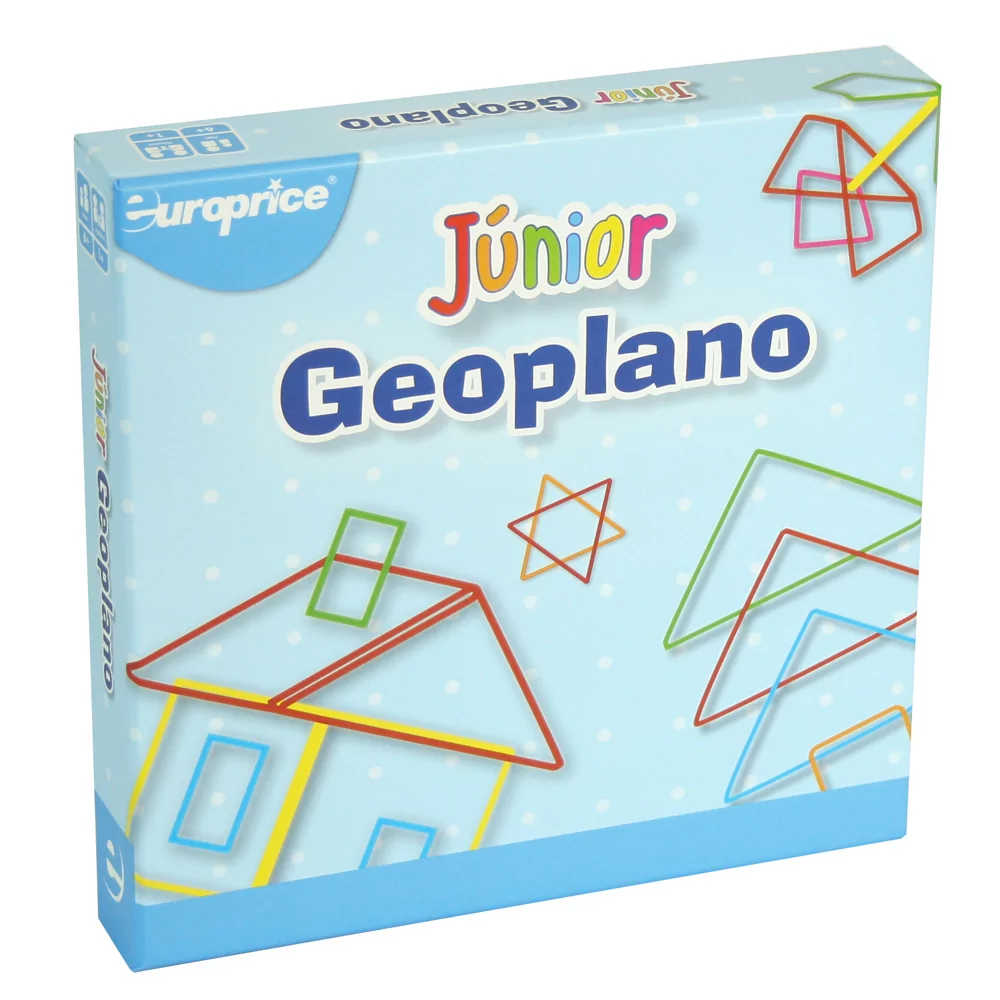
Now that you know the benefits of the educational game Geoboard, check out the rest of the “Junior” range here.
Keywords: geoboard, mathematics education, geometry teaching, pedagogical tools, benefits of the geoboard, geoboard activities, cognitive development, differentiated instruction, educational games
Post Views: 99