No products in the cart.
Shop all products

Did you know that chess is one of the most famous board games today? In this article, you will learn everything about chess: its origin and history, interesting facts, the rules, and best practices for playing.
The History of Chess
Firstly, the origin of chess is still a controversial topic among historians, with various theories (and even mythological tales) attempting to explain how this board game classic came to be. However, the most widely accepted version is that it originated in India under the name Chaturanga in the 6th century.
Later, around the end of the 15th century, in Southern Europe, the game underwent one of the main changes in its history. The replacement of pieces and the establishment of new rules led to its rapid popularization.
This rise in chess’s popularity eventually led to the creation of the first tournament in 1851, held in London. Subsequently, more tournaments were organized in major European cities, and the first professional chess players began to emerge.
By 1886, the first official contest for the title of World Chess Champion took place between Steinitz and Zukertort.
With increasing initiatives to create a governing body for the sport, the World Chess Federation (FIDE) was founded in 1924 in Paris.
How to Play Chess
Chess is a game of tactics and strategy played between two players. Learning the rules of chess is easy, and it’s never too late to start playing.
The Pieces
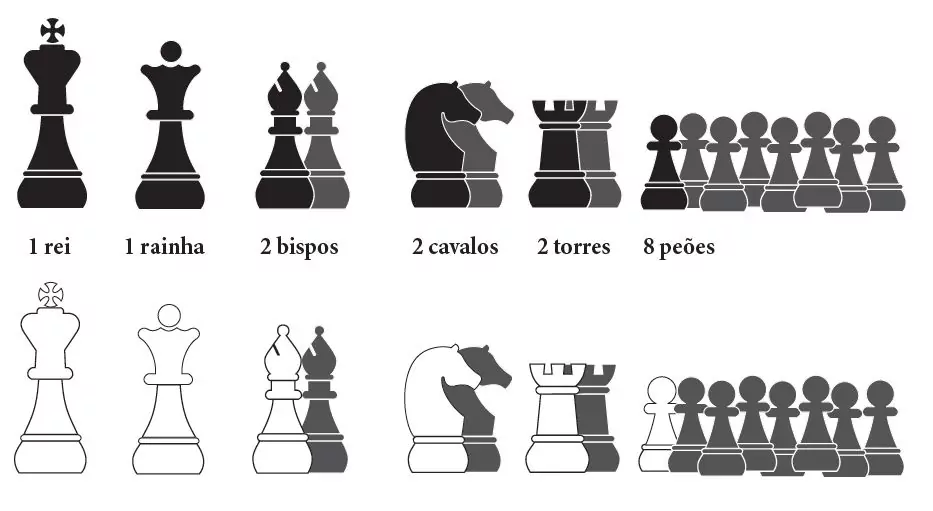
Each piece has its role on the board, and even the weakest one can be the key to defeating your opponent if used wisely!
Setup and Start of the Game
First, arrange the pieces and decide who will play with which color. The player with the white pieces moves first, and then turns alternate.
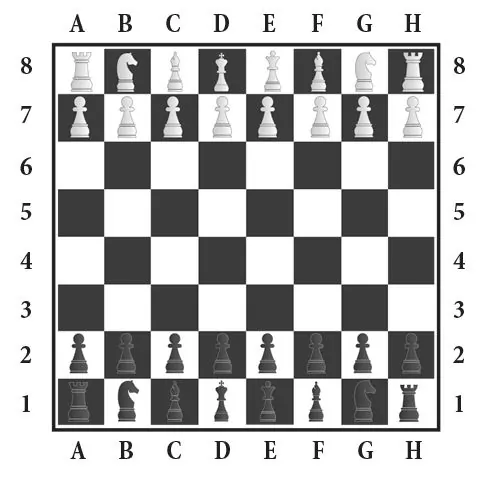
Place the board between the two players so that the bottom-right square of each player is white. Arrange the pieces as shown in the image, making sure the white queen is on a white square and the black queen is on a black square.
The first rank (closest to each player) should be set up as follows: rook, knight, bishop, queen, king, bishop, knight, rook.
The second rank is filled with 8 pawns.
Pieces and Moves
Captured pieces must be removed from the board. Players can only capture one piece at a time. If a player has the opportunity to capture more than one piece on their turn, they should capture the strongest piece or the one that they consider represents the greatest threat to their game at that moment.
- Pawn:
The pawn can only move forward and only if there are no pieces blocking its path. On its first move, it can advance 1 or 2 squares, but after that, it can only move 1 square at a time and never backward. Pawns capture pieces diagonally, meaning one square forward to the left or right. - Rook:
The rook can move forward, backward, left, or right, as many squares as desired, as long as its path is clear. It cannot jump over other pieces. - Knight:
The knight moves in an “L” shape: two squares in one direction (horizontal or vertical) and then one square perpendicular, or vice versa. This piece can jump over other pieces, as long as the square where it lands is empty. - Bishop:
The bishop moves diagonally to any square, as long as the path is unobstructed. - Queen:
The queen moves horizontally, vertically, and diagonally, to any square, as long as the path is clear. - King:
The king can move horizontally, vertically, or diagonally, but only one square at a time and only if the square is not threatened. You cannot move the king into check.
Check and Checkmate
The king is in check when it is under threat of capture by an enemy piece. In this case, the player whose king is in check must immediately:
- Move the king to a square where it is not threatened, or
- Block the threatening piece with another piece, or
- Capture the threatening piece with the king.
If none of these options is possible, the king is in checkmate, and the player loses the game.
If neither player can put the opponent’s king in check, the game is a draw.
Special Moves
- If a pawn reaches the opponent’s side of the board, it can be promoted to any other piece of the same color, except for the king. This promotion happens immediately when the pawn reaches the last rank. There is no limit to the number of pawns that can be promoted, so a player could, for example, have 9 queens or 10 rooks.
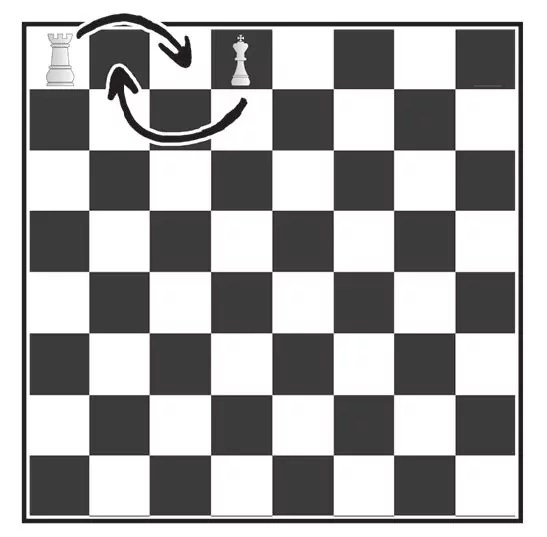
- It is also possible to perform a special move with the rook and the king called castling (as shown in the image below). For castling to be allowed, neither the rook nor the king must have moved before, the king must not be in check, nor end up in check during the move, and there must be no pieces between them. To castle, move the king two squares toward the rook, and place the rook on the square that the king crossed, performing both moves simultaneously.
Discover the Unique Thrill of Chess
Chess is one of the most famous board games today. It is estimated that around 605 million people play it worldwide. Beyond being a fun strategy game for all ages, and despite being loved by many scholars and intellectuals, anyone can play.
Dive into this fascinating world of chess and get an affordable set to play with friends and family. Experience the thrill of planning strategies, anticipating moves, and becoming a master of the board. Don’t miss the opportunity to enjoy this timeless game that offers endless challenges and entertainment with our chess set.
-
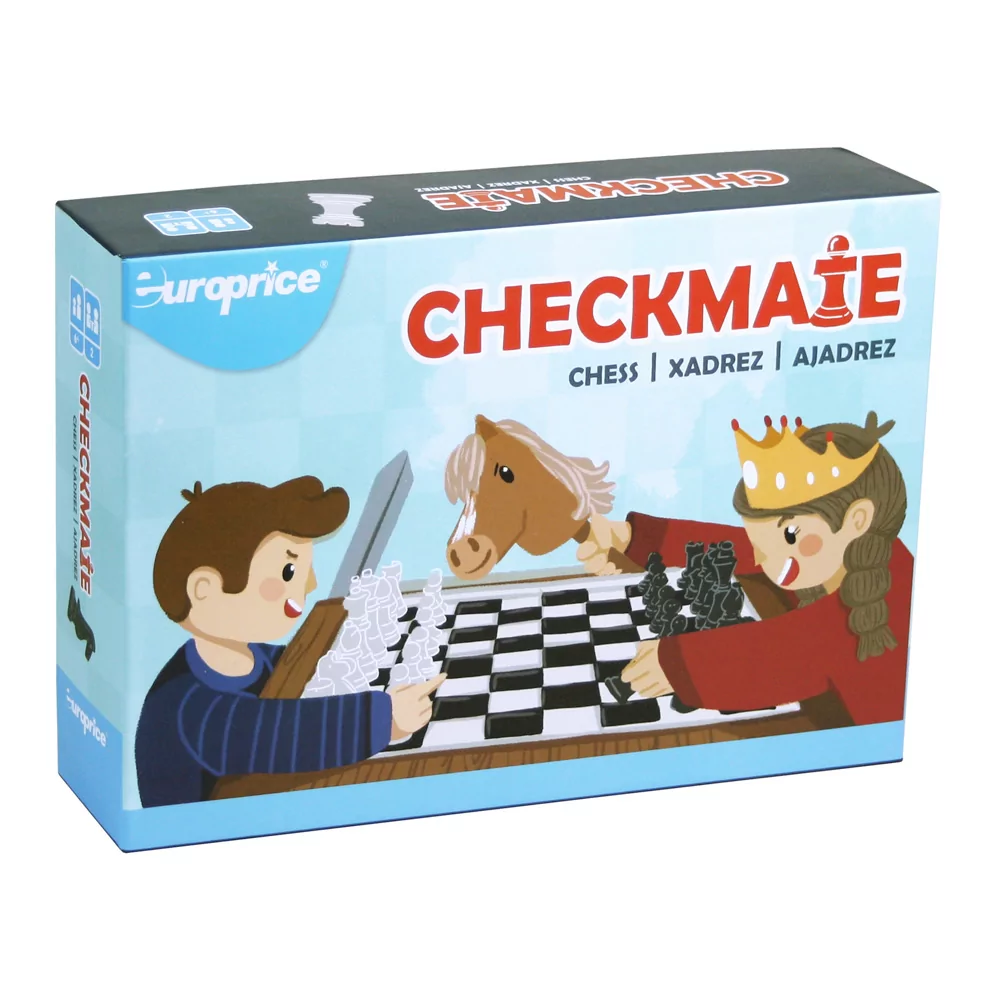
 Checkmate – Chess14.24€